The Pandupol Temple history is rooted in the Mahabharata. According to legend, the Pandavas, exiled from Hastinapur, passed through this region during their 12 years of forest exile. The area was then known as Viratnagar. It was here, on a rocky hillside deep in what is now Sariska, that Bhima encountered an old monkey lying across the forest path.
Bhima, known for his strength and his impatience with obstacles, asked the monkey to move aside. The monkey replied that he was too frail to do so, and suggested that Bhima simply lift his tail. Bhima tried and could not. The monkey then revealed himself as Lord Hanuman, appeared in his full form, and taught Bhima a lesson in humility that would carry through the rest of the epic.
As a mark of respect, the Pandavas placed an idol of Lord Hanuman at this spot, and the site has been venerated ever since. The name Pandupol translates literally as the Pandavas' Gate. It refers to the rock formation here, believed to be the cleft that Bhima struck open with his mace during their passage through the forest. The temple was later formally established by Sant Nirbhaya Dassji Maharaj.
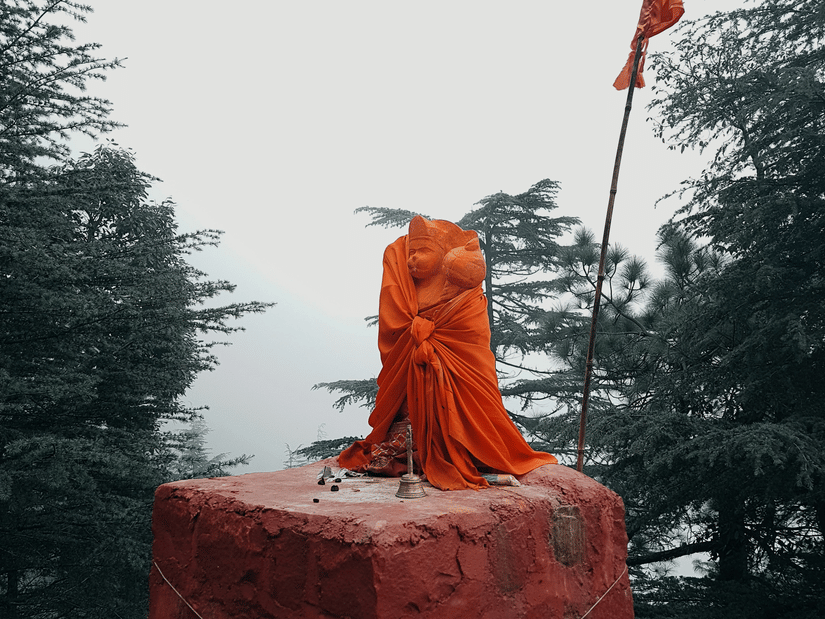
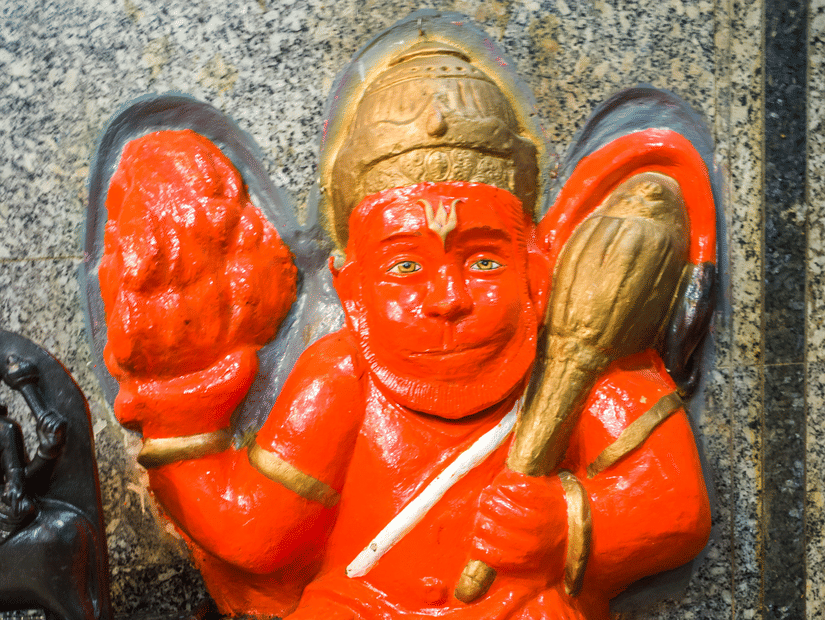
The Reclining Idol: An Unusual Form of Hanuman
Here, even devotion seems to move at the pace of the forest. Most Hanuman temples in India enshrine a standing or seated idol; Pandupol, Sariska, is among the rare few where the deity rests in a reclining posture. It is this unusual image, stretched in quiet repose beneath the Aravalli hills, that sets the temple apart from nearly every other Hanuman shrine you may have encountered.
The form is believed to commemorate Hanuman resting after his encounter with Bhima, though some traditions see it as a gesture of blessing for all who undertake the journey through the forest to reach him. Beside the temple lies a sacred water tank, where devotees pause for a ritual dip before stepping into the inner sanctum.
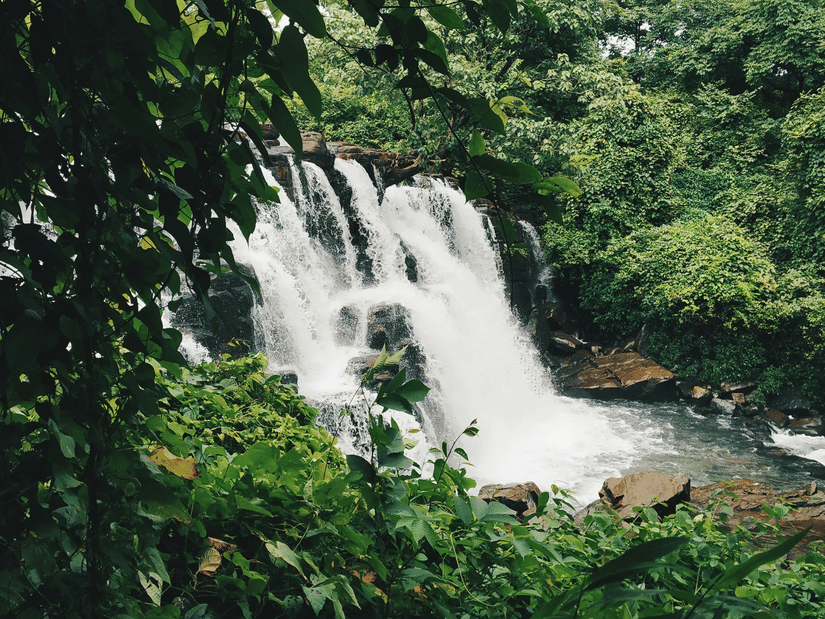
As the forest deepens, Rajasthan begins to shed its familiar colours. Around 300 m from the main temple, a 35 ft. waterfall emerges through a narrow cleft in the Aravalli rock face. For most of the year, it is little more than a thread of water. Then the monsoon arrives, and the falls gather momentum, tumbling over dark rock framed by fresh green growth.
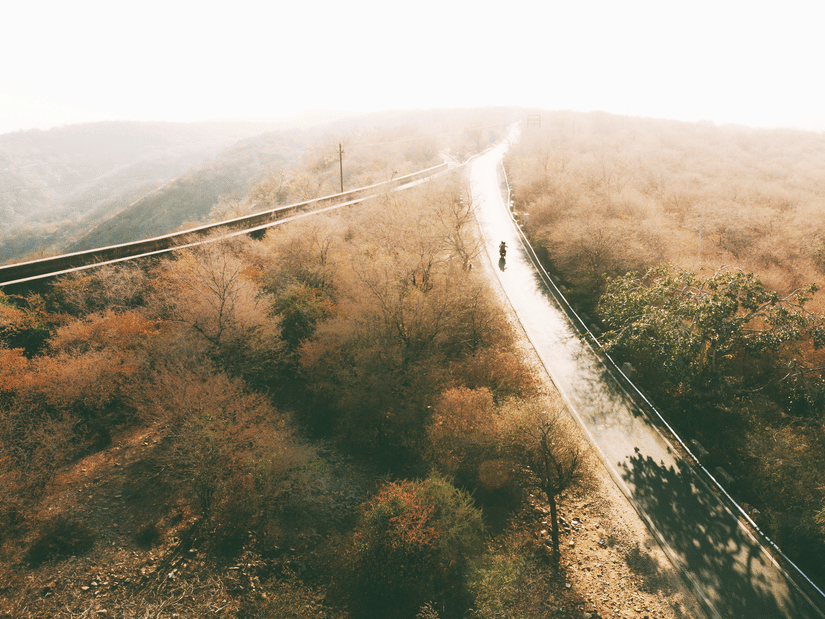
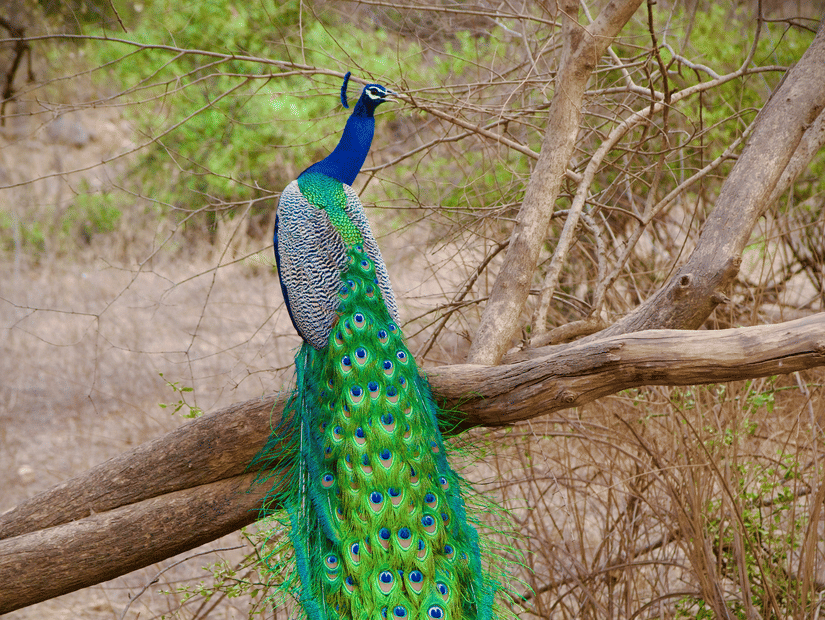
Between July and September, the waterfall becomes part of a larger transformation. The trail to the temple passes through a landscape few first-time visitors expect to find in Rajasthan. Dhok forests thicken, bamboo clumps crowd the slopes, grass blankets the hills, and langurs move through the canopy while peacocks wander across the road ahead. The air feels cooler, the colours richer, and the reserve altogether more alive. At this time of year, the journey to Pandupol is as memorable as the shrine itself.
There are a few rules specific to Pandupol that you should know before you go:
- Vehicle Access: Private vehicles may enter the Pandupol area only on Tuesdays and Saturdays. These are considered auspicious days for Lord Hanuman and are when the temple sees the highest footfall.
- Entry Fee: An entry fee of approximately INR 20 for Indians and INR 100 for foreigners applies for entering the Sariska core zone to reach the temple. Verify current rates at the Sariska gate before entering.
- Timings: The temple is generally open from 6:00 AM to 6:00 PM. Plan to arrive and depart within daylight hours when visiting for the first time.
- Footwear: Remove footwear before entering the temple complex.
- Forest Etiquette: The approach road goes through active tiger territory. Stay in your vehicle except at designated stopping points.
Even on its busiest days, Pandupol never quite loses its sense of stillness. Tuesdays and Saturdays bring a steady flow of devotees from Alwar, Jaipur, Delhi, and the towns scattered between them, yet the atmosphere remains more measured than at Rajasthan's larger temple complexes. People arrive with prayers, linger over offerings of dal, baati, and churma, and settle into the easy rhythm of a shrine that seems shaped as much by the forest as by faith.
Twice a year, however, the quiet gives way to celebration. During the Lakkhi Mela, held in Chaitra Navratri (March to April) and again on Bhado Shukla Ashtami in September, tens of thousands of devotees make their way through the reserve, turning this secluded corner of Sariska into one of the region's most significant religious gatherings.
Yet the forest never retreats far from the experience. Langurs watch from temple walls, macaques patrol the pathways, and peacocks appear unexpectedly along the roadside. Spotted deer often emerge from the undergrowth, while birdsong follows much of the route in. Arrive early enough, and there is always the possibility that the reserve's most famous resident might reveal itself. Few pilgrimages come with the chance of a tiger crossing your path before you reach the temple.
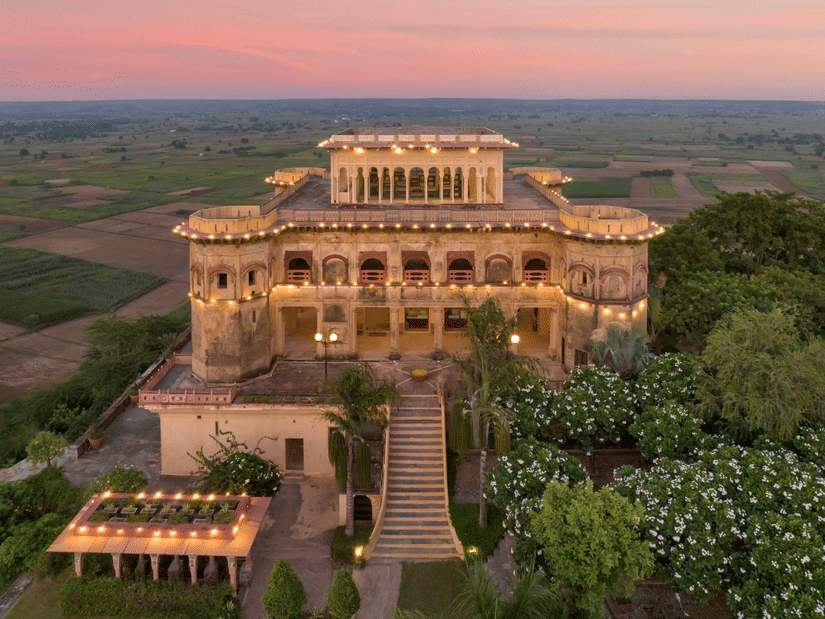
Arrive a day early and allow yourself to absorb the sweeping views from our 8-acre fairytale fort-palace, perched atop the 2-billion-year-old Aravallis. Wander through verdant terraced gardens, often compared to the legendary Hanging Gardens of Babylon, where pathways meander through cascades of greenery and reveal unexpected vistas at every turn. Spend a languid afternoon beside the spectacular 100 ft. Pataal Kund pool, sunk deep into the hillside, its still waters reflecting the changing moods of the sky.
Back at Tijara Fort-Palace, no two of the 109 rooms and suites are alike. Dedicated to India’s leading artists, aesthetes, and designers, many adorned with their artworks, furnishings, and distinctive design sensibilities. Whether you stay in the Rani Mahal, Mardana Mahal, Deewar Mahal, or Khajur Mahal wing, you are surrounded by the fort's historical architecture, its art, its views, and the modern comforts that ensure an effortless stay.
As the sun disappears behind the hills, walk through bougainvillea-filled alleys to the Khajur Mahal restaurant. There, a wholesome buffet spread brings together local Rajasthani cuisine and international favourites, served in customised cutlery. The handcrafted flooring beneath your feet and the bespoke textiles around you draw the eye as readily as the food itself, turning a meal into an experience for both the palate and the senses.