Built to Defend, Built to Impress
Rajput architecture features elements specifically designed to prevent intrusion, making them among its most recognisable characteristics. Grand gateways, known as pol or darwaza, were the ceremonial and strategic heart of any Rajput fort.
Built high and set at angles to prevent cavalry charges, they were fitted with spiked doors to discourage elephants from being used as battering rams. The fortified walls, often several metres thick and topped with ramparts, doubled as a stage for royal power. Towers punctuated these walls at regular intervals, giving defenders a clear line of sight across the surrounding landscape.
What reads today as an aesthetic decision, those clean lines of stone meeting the sky, was originally a calculation about how far an arrow could travel.
Air, Light, and the Art of Ornament
If the walls of a Rajput fort said not to enter, the courtyards inside said something quite different. Large open-air spaces designed to catch winds functioned as natural ventilation systems in a region where summer temperatures make ambition feel optional.
Terraced gardens set at different levels created microclimates that kept the upper reaches of a palace several degrees cooler than the plains below.
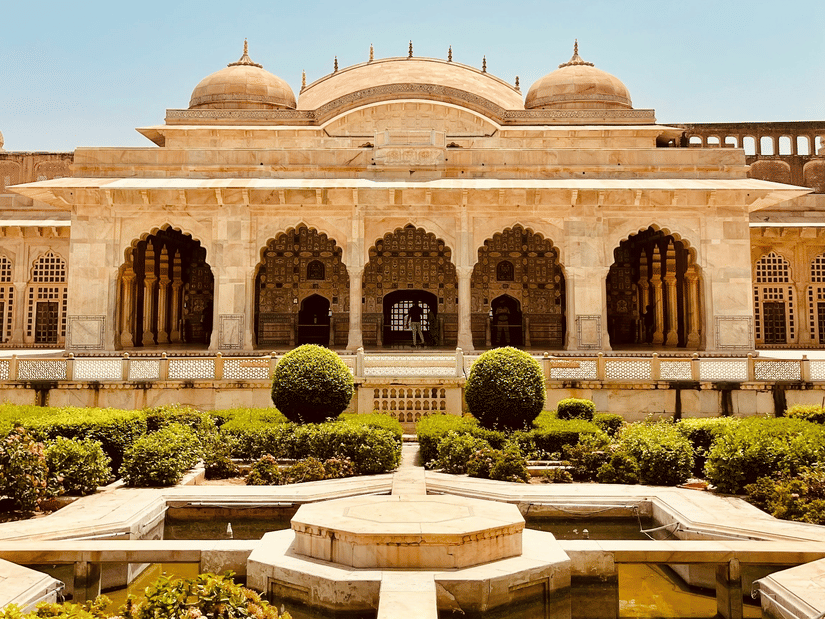
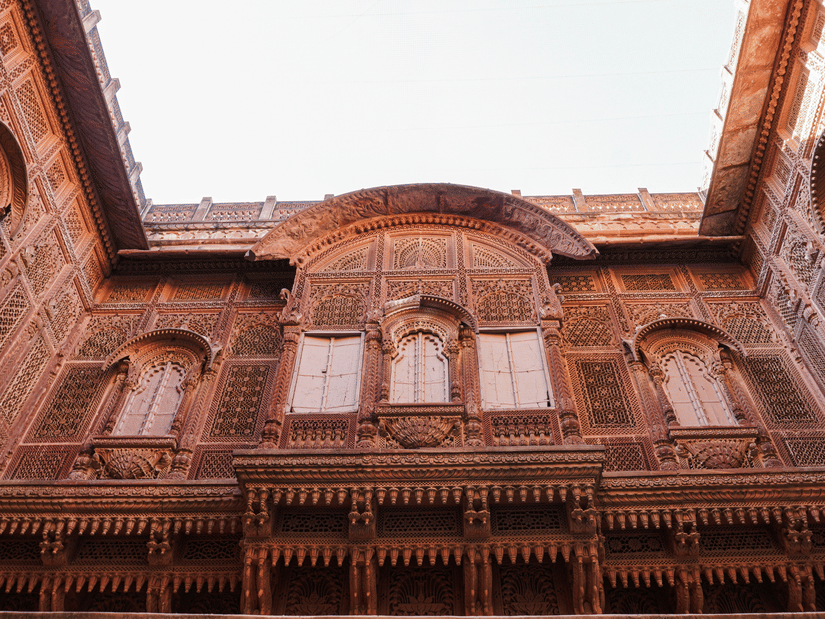
The ornamental side of Rajput architecture was rarely decorative for its own sake. Jharokas, the projecting balconies fitted with carved stone screens, allowed royal women to observe public life without being seen.
Decorative arches framed views as deliberately as a painter frames a canvas. Sandstone, the material of choice across Rajasthan, yielded to chisels that produced geometric patterns and figurative sculptures on the same stretch of wall.
Amber Fort, Jaipur
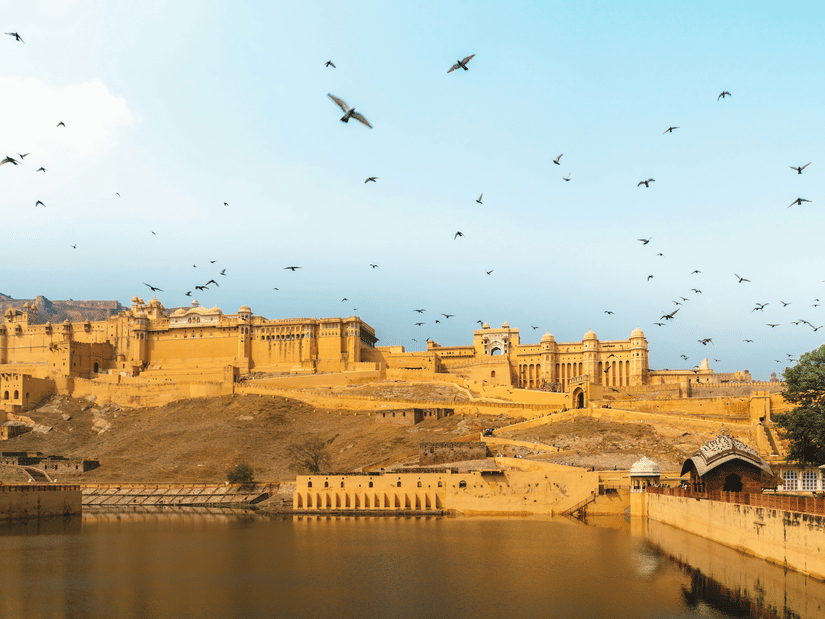
Perched above the village of Amer, approximately 11 km north of Jaipur, Amber Fort is a UNESCO World Heritage Site that moves from austere outer walls into interiors of extraordinary delicacy. Its Sheesh Mahal, lined with thousands of tiny mirrors, multiplies a single candle flame into a constellation.
Visit Details
- Timings: 7:00 AM - 8:00 PM daily
- Entry Fee: INR 200 for Indian adults and INR 100 for Indian students | INR 1,000 for foreign adults and INR 500 for foreign students | Free for children below the age of 7
- Light & Sound Show: 7:30 PM (English), 8:00 PM (Hindi); about INR 100 - INR 200 per person
- Visitor Tips: Student tickets can be issued based on valid ID cards. Start early to avoid mid-day heat. Wear comfortable footwear.
Mehrangarh Fort, Jodhpur
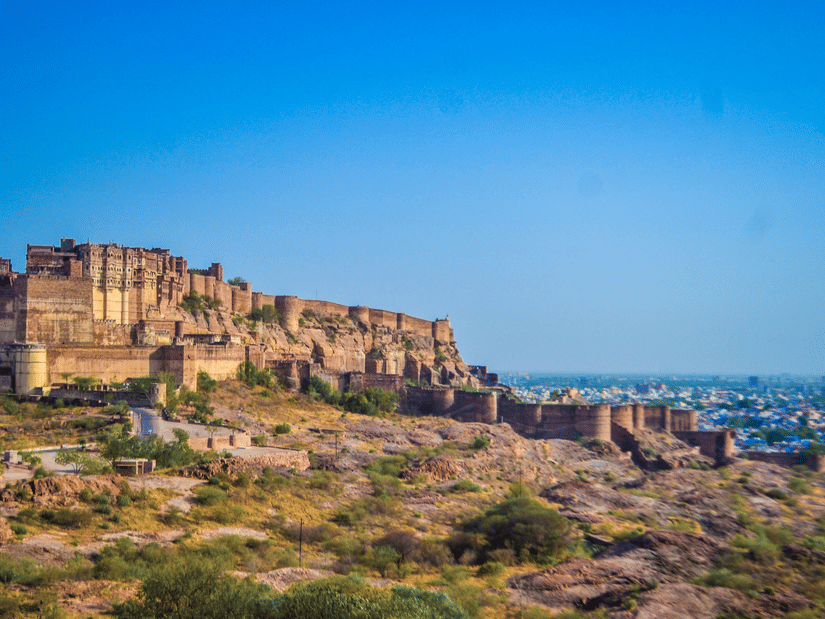
Rising 122 m above Jodhpur on a sheer natural outcrop, Mehrangarh is managed by a museum trust that has restored its palace rooms, weapon galleries, and textile collections to an exceptional standard. The audio guide, included in the international visitor ticket, covers the fort's history across its 7 gates.
Visit Details
- Timings: 9:00 AM - 5:00 PM daily
- Entry Fee: INR 100 for Indian students and senior citizens | INR 200 for Indian visitors | INR 500 for foreign students | INR 800 for foreign visitors | INR 120 - INR 1,000 for guided tour
- Night Tours: 6:00 PM - 8:00 PM (guided; additional charges apply)
- Visitor Tips: Spare 3 - 4 hours to enjoy the fort. Carry water and wear hats and sunglasses.
Chittorgarh Fort, Chittorgarh
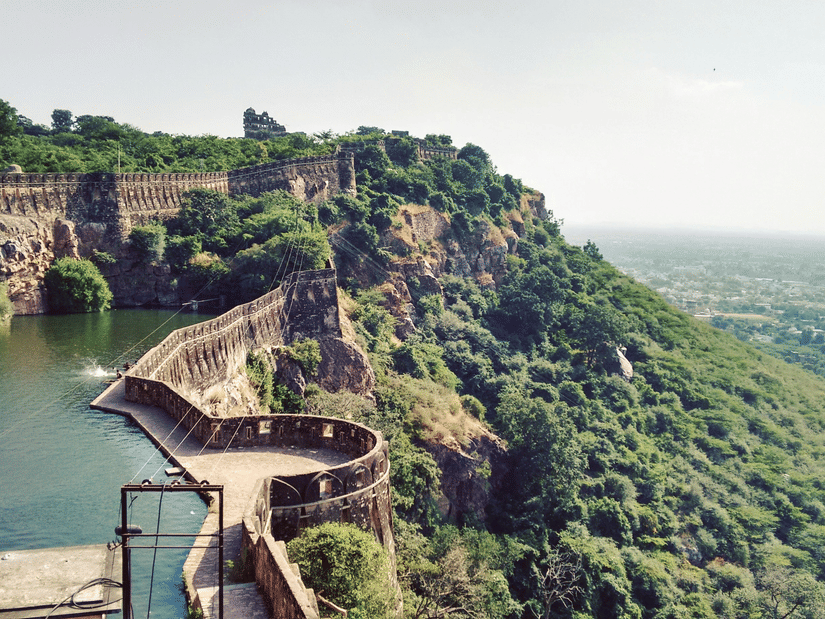
Chittorgarh Fort, a UNESCO World Heritage Site, spreads across 700 acres on a plateau 180 m above the surrounding plains, making it the largest fort in India. Its 65 historic structures include 4 palaces, 19 temples, and the 15th-century Vijay Stambh, a victory tower built by Rana Kumbha after defeating the Malwa Sultanate.
Visit Details
- Timings: 9:00 AM - 6:00 PM daily (museum closed on Mondays)
- Entry Fee: INR 35 for Indians and INR 550 for foreigners
- Light & Sound Show: 7:00 PM - 8:00 PM | INR 150 for adults, INR 75 for children, and INR 300 for foreign visitors
- Visitor Tips: Carry cash for souvenir purchases. The fort takes a magnificent form during the golden hour, best for photography.
The Unfinished Wonder: Architecture of Tijara Fort-Palace
Not all great expressions of Rajasthan fort architecture announce themselves with the scale of Chittorgarh or the renown of Amber. Some arrive quietly, perched on a hillside in Alwar, and ask to be understood on their own terms.
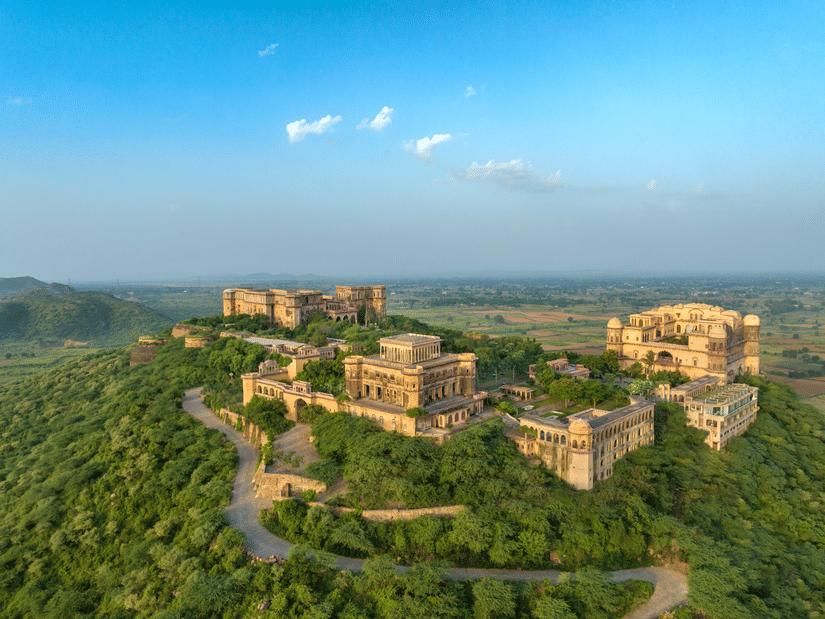
Construction of Tijara Fort-Palace began in 1835 CE under Maharaja Balwant Singh, the ruler of a princely territory carved from the divided Alwar state. Built in the Rajput-Afghan style with early colonial influences, it employed master architects from Kabul and Mughal Delhi. Maharaja Balwant Singh died in 1845 CE, and the fort remained incomplete for well over a century. Neemrana Hotels undertook its restoration, completing the complex and opening it as a heritage property in January 2016.
Its 3 structures, the Mardana Mahal, Rani Mahal, and Hawa Mahal, were given new life while retaining the architectural character that makes Tijara genuinely unlike anywhere else.
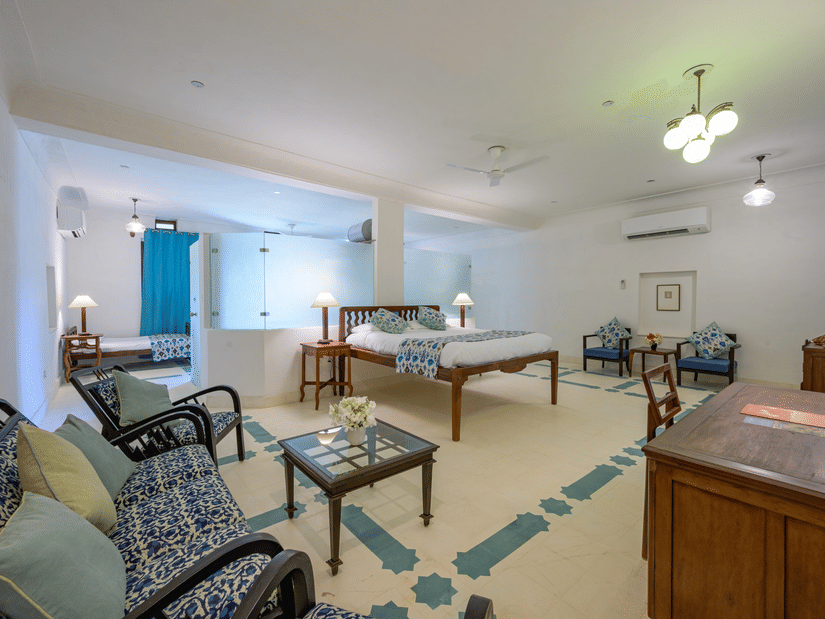
For those who prefer to appreciate their Rajput architecture from a position of considerable comfort, Tijara Fort-Palace is a good place to start. Our heritage retreat offers 109 suites and rooms across the restored complex, each named after one of India's leading painters, designers, or artists.
Staying here is less like checking into a hotel and more like being handed the key to a chapter of history that most people only read about.
Perched on the Aravalli Hills and surrounded by 7 terraced gardens, our resort offers views that make the journey worthwhile before you have even unpacked. Treat yourself to the authentic taste of Rajasthan at our multi-cuisine Khajur Mahal restaurant or raise a glass of your favourite beverage with your pals at The Marigold Bar.
After a day out exploring the splendour of Rajput architecture, unwind at our spa offering massages, facials, and yoga, or take a refreshing dip in our sprawling swimming pool, rounding off an experience that balances heritage, comfort, and thoughtful indulgence.