- Rajasthani Folk Dance
- Onam Sadya
- Rajput Architecture
- Summer Vacation Places in Tamil Nadu
- Places to Visit near Bhimtal
- Bhangarh Fort, Alwar
- Dolphin Nose Viewpoint, Coonoor
- Offbeat South India Tourist Places
- Trekking in Nainital
- Holi in Punjab
- Neem Karoli Baba Temple
- New Year Celebration in Alwar
- January Events in Goa
- Best Tourist Spot in Tamil Nadu
- New Year in Kerala
- Shopping in Kochi
- New Year Celebration in Rajasthan
- Christmas in Goa
- Trip from Delhi to Alwar
- New Year Celebration in Goa
- History of Maratha Empire
- New Year in Kochi
- Places of Interest in Gwalior
- Bala Quila, Alwar
- Jet Ski in Goa
- Paradesi Synagogue, Kochi
- Explore Gwalior Fort
- Visiting the Vast History: Kochi Mattancherry Palace
- Heritage Wedding in Rajasthan
- Tourist Attractions in Gwalior
- Hotel in Tijara
- Cabo De Rama Beach
- Matsya Festival
- Trip from Bangalore to Goa
- Tourist Attractions in Patiala You Shouldn't Miss
- Jagannath Mela in Alwar
- Waterfalls in Goa
- Ideal Places for a Short Trip near Delhi
- Hidden Gems in Rajasthan
- Delhi to Sariska National Park: Trip Guide
- Traveller’s Guide to Goa Carnival
- Weekend Trip from Gurgaon
- Trip to Rajasthan with Family
- Delhi to Rishikesh to Nainital
- Delhi to Patiala Tour Guide
- New Year Celebration Near Delhi NCR
- Christmas Celebration in Tijara Fort Palace, Alwar, Rajasthan
- Nainital in the Winter Season
- Sunburn Goa 2024
- Trip to Alwar
- Water Sports in South Goa
- New Year Eve Party in South Goa
- Moosi Maharani Ki Chhatri
- Siliserh Lake
- Must try dishes in Rajasthan
- Best Places to Visit around Jaipur
- Solo Trip to Rajasthan
- Sariska National Park
- Places to visit in Rajasthan in December
- Staycation Near Delhi NCR
- Best Holiday Destinations Near Delhi
- Best Resorts Near Delhi for Family
- Vacations near Delhi
- Goa in Summer Season
- Naina Devi Temple, Nainital
- Best Time to Visit Rishikesh
- Tijara Ji Jain Temple
- Must Visit Historical Sites in South Goa
- Local Food in South Goa
- Traditional Festivals of Rajasthan
- Naina Peak Trek
- Fatehpur Shekhawati
- Activities in Nainital
- Local Food in Tranquebar
- Alwar Famous Food
- Offbeat Places in Nainital
- Offbeat Places in South Goa
- Offbeat Places in Rajasthan
- History of Tharangambadi
- Best time to visit Nainital
- Best Beaches in South Goa
- History of Shekhawati
- The Best Beaches in Tamil Nadu
- Places to Visit in Shekhawati
- New Year Celebration in Nainital
- Weekend Trip in Tamil Nadu
- New Year in Goa
- Nainital Itinerary for 2 Days
- The Best Places to Visit in Patiala
- Places to Visit in Tharangambadi
- South Goa Itinerary for 3 Days
- Tourist Attractions in Alwar
- Kochi 2-day Itinerary
- Things to Do in South Goa
- Places to Visit in Gwalior
- Weekend Getaway from Jaipur
- Best Places to Visit in Alwar
- Best Time to Visit Alwar
- Places to Visit in Alwar
- Best Time to Visit Gwalior
- Literary Connections of Ramgarh: Tagore and Mahadevi Verma
- Things to Do in Alwar in Monsoon
- Exploring the Festivals of Alwar
- Everything You Need to Know About Betul, Goa
- Things to Do in Kochi at Night
- Uttarakhand Itinerary for 7 Days
- Best Time to Visit Kochi
- Visit The Mesmerising Hill Stations in South India
- The Best Places to Visit Near Nainital
- A Weekend Getaway to Ramgarh: Travel Guide
- Explore The Magical Cochin Backwaters
- The Majestic Coonoor to Ooty Toy Train
- The Best Vacation Spots Near Chennai
- Must Visit Places in Kerala
- Destination Wedding in Rajasthan
- Exploring the Orchards in Ramgarh
- Explore the Museums of Tranquebar
- Masilamani Nathar Temple, Tharangambadi
- Things to Do in Kesroli
- Best Places to Visit in South India in January
- Exploring the Tamil Nadu Coastline
- Places to Visit in Gwalior at Night
- Places to visit in Rajasthan in Winter
- Unexplored Treasures of Uttarakhand
- A Visit to Mangalavanam Bird Sanctuary
- Royal Rajasthani Weddings
- Rajasthan Itinerary for 7 days
- Into the Wilderness of Rajasthan’s National Parks
- Explore the Historic Town of Neemrana, Rajasthan
- Enchanting Lakes of Nainital
- A Dive Into the Royal History of Alwar
- Trails and Treks near Nainital
- The Seven Most Frequented Places in Rishikesh
- Kochi: The Queen of the Arabian Sea
- Fairy Queen: The Oldest Working Steam Locomotive
- Forts and Palaces of Alwar
- The Unparalleled Art and Culture of Madhya Pradesh
- Best Beaches To Visit in Cochin
- A Spiritual Journey to the Temples in Alwar
- Handicrafts of Rajasthan
- Places to Eat Street Food in Gwalior
- Wellness Retreats in Rishikesh
- The Danish History of Tranquebar
- Of Mystical Spaces and Hidden Treasures
- Rehabilitating Our Roots in Ruins... A Meet with Mr Aman Nath
- Our Annual Getaway to the Ramgarh Bungalows
- Experience Gwalior The Royal Way With Deo Bagh
- Living it up at a 14th Century Fort
- The Best of Both Worlds - Delhi and Jaipur
- Alwar City - Attractions
- Gwalior - The Tourist Capital
- Drivable Weekend Getaway from Delhi-NCR
- Hiking and Trekking Trails near Jaipur
- Safe Weekend Getaway from Delhi
- Trek Trails from Rishikesh
- Things to do Around Tranquebar Fort
- Majestic Temples of Gwalior
- Tea Plantations of Coonoor
- Fort Stay in Alwar
- Best Places to Visit in Tamil Nadu
- Shopping in Gwalior
- The Chinese Fishing Nets of Kochi
- Exotic Swimming Experiences near Delhi
- Ketty Valley, The Second Largest Gorge in the World
Every year, Kerala holds its breath for 10 days. Then the flowers go down, the harvest sings, and the whole state sits together to eat. Onam is not merely the biggest celebration in Kerala; it is a memory given form, the return of a beloved king, and proof that some traditions are too beautiful to let go.
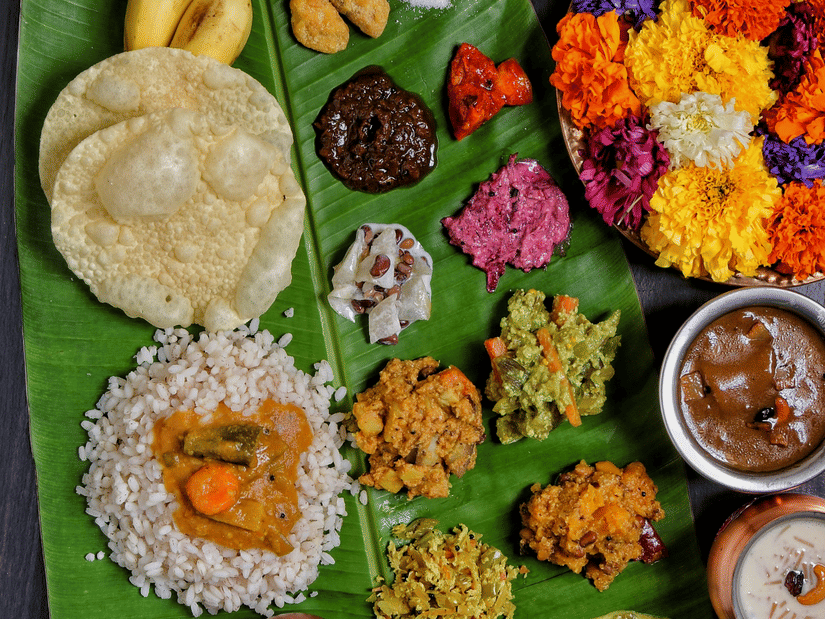
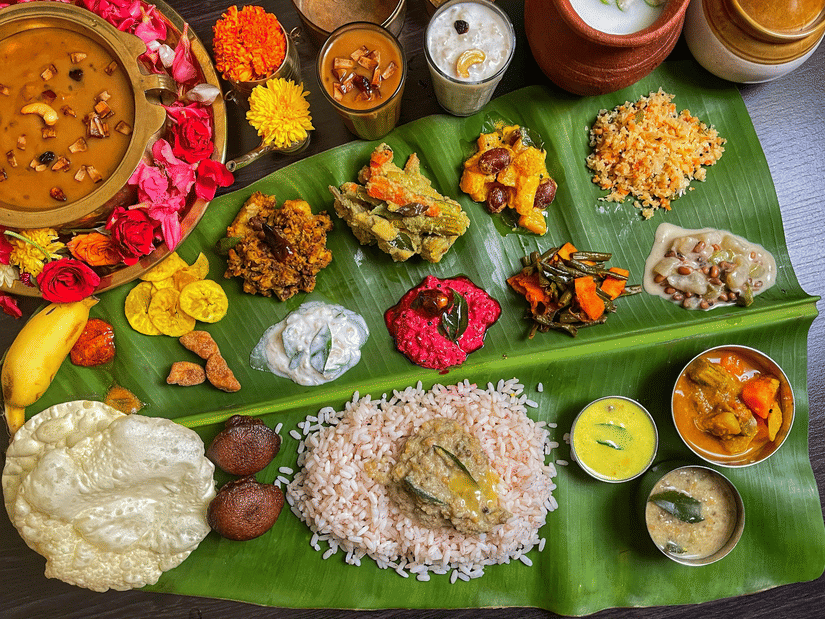
At the centre of everything is the Onam sadya: a vegetarian feast served on a fresh banana leaf, carrying anywhere between 24 and 28 dishes prepared with a care that borders on devotion. It is the meal every Keralite grows up dreaming about, the one no restaurant quite manages to replicate, and the one that tastes, above all else, of home. If you want to understand Onam, start here.
10 Days that Bring Kerala to a Standstill
There are festivals, and then there is the Onam festival Kerala holds closest to its heart. Celebrated across 10 days in the Malayalam month of Chingam, usually between August and September, it marks the end of the monsoon and the arrival of the harvest season, arriving just as the paddy fields empty and the skies finally clear. The festival reaches its peak on Thiruvonam, though each of the 10 days carries its own name and its own set of rituals.
From the first Atham, when the pookalam begins with just a handful of petals, to the grand Thiruvonam when the feast is finally served, every day deepens the celebration. But ask any Keralite what Onam is truly about, and the answer will almost always come back to the same thing: the food.
Why is Onam Celebrated?
It comes down to one story, and it begins with a king named Mahabali. He ruled over Kerala in an era that people still speak of with a kind of longing: no poverty, no dishonesty, no grief. Every person was treated equally, every need was met, and the land itself seemed to bloom a little more generously under his reign.
The gods, unsettled by his growing stature among mortals, sent Lord Vishnu in the form of Vamana, a young Brahmin scholar, who tricked the great king into surrendering his kingdom. As Mahabali descended into the underworld, he was granted a single boon: to visit his people once every year. Onam is that visit. The flowers, the feast, and the festivities are all one long act of welcome for a king who has never truly left.
An Era of Equality that Kerala Still Remembers
The memory of Mahabali’s reign is not a lament. It is, if anything, an aspiration: proof that fairness and abundance are not incompatible, and that a just world is possible because it has, in some distant telling, already existed.
This spirit moves quietly through every Onam custom. The pookalam is drawn outside every doorstep, regardless of the house behind it. The sadya is served the same way in every home: the same banana leaf, the same dishes, the same sequence. No guest sits higher than another. In a festival full of colour and spectacle, it is this democratic undercurrent that gives Onam its particular depth. Kerala does not just remember Mahabali’s golden age; it tries, for 10 days, to live it.
The Ritual of the Banana Leaf
The Onam sadya is inseparable from the banana leaf it arrives on. Before the first dish is served, a fresh leaf is placed lengthwise before each guest, tip to the left, surface wiped clean with water. Nothing about this is accidental. Every detail of its placement follows a logic passed down across generations.
The meal is entirely vegetarian, in keeping with the sacredness of Thiruvonam. Each dish has its ordained place on the leaf: the pickles and banana chips along the top edge, the main preparations across the lower half, the rice in the centre. To disrupt this arrangement is to misunderstand what is being offered. The banana leaf is not a plate. It is a tradition you eat from.
What Fills the Leaf
On Thiruvonam, an Onam sadya carries a long sequence of individual preparations, each arriving in a particular order refined over centuries. The balance of sweet, sour, salty, and bitter is deliberate; no single flavour is permitted to dominate.
Dishes on the Banana Leaf
- Parippu: The first curry served on the leaf, made of green gram or pigeon peas, poured over rice with a generous measure of ghee
- Avial: A thick coconut-and-vegetable medley tempered with curry leaves, widely regarded as the centrepiece of the sadya
- Sambar: A slow-cooked lentil and tamarind stew, poured generously over rice in the middle courses
- Thoran: A dry stir-fry of finely grated coconut with seasonal vegetables, understated and essential in equal measure
- Olan: A mild, quietly flavoured preparation of red cowpeas and ash gourd in coconut milk, the gentle counterpoint to the bolder dishes around it
- Erissery: A thick preparation of elephant foot yam and plantain with roasted coconut, earthy and deeply satisfying
- Kaalan: A tangy curd-based curry, thickened with coconut, traditionally served towards the end of the meal; tradition holds that a good kaalan should not leak from between the fingers.
- Pachadi: A yoghurt-based preparation, cool and lightly spiced, traditionally made with pineapple or cucumber
- Rasam: Thin, peppery, and served towards the close of the meal; the course that gently signals the end is near
- Inji Puli: A sharp tamarind-and-ginger relish that cuts through the richness and keeps the palate honest throughout
- Papadam: Crisp, thin lentil wafers that arrive early and stay to the last, adding texture to every bite
- Payasam: The dessert, served in more than one variety; sweet and unhurried, the last thing the leaf holds before it is folded, and the afternoon slows
A Glimpse of Onam Celebration in Kochi
Few cities wear Onam as naturally as Kochi. The Onam celebration in Kochi draws from a deep cultural well, and for 10 days, the city’s streets, courtyards, and waterways fill with the kind of activity that feels less like a festival and more like an entire state choosing, collectively, to be joyful. Across Fort Kochi and beyond, the traditional Kerala kasavu, a cream-coloured cotton with a gold border worn as the mundum neriyathum by women and the mundu by men, becomes a common sight. It is the quiet uniform of the people honouring something they hold very close.
What to Expect
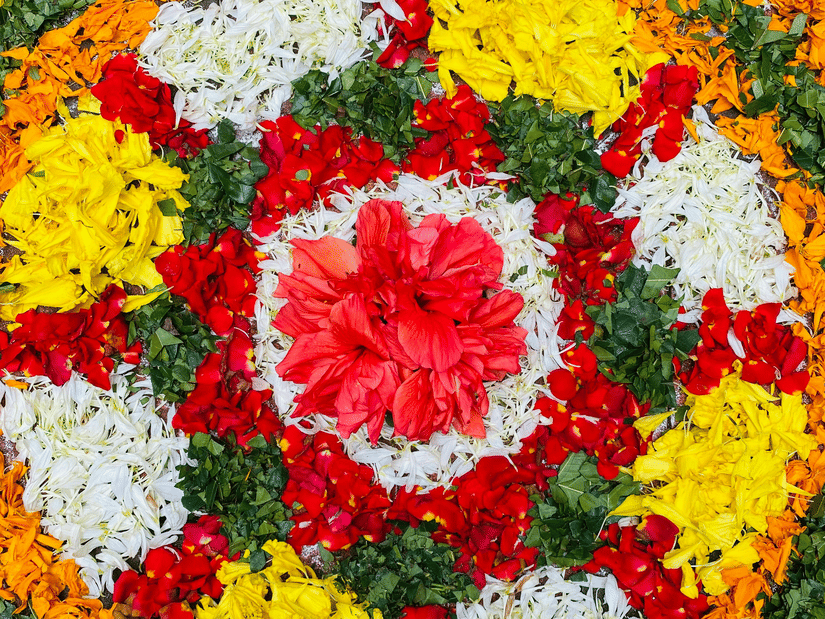
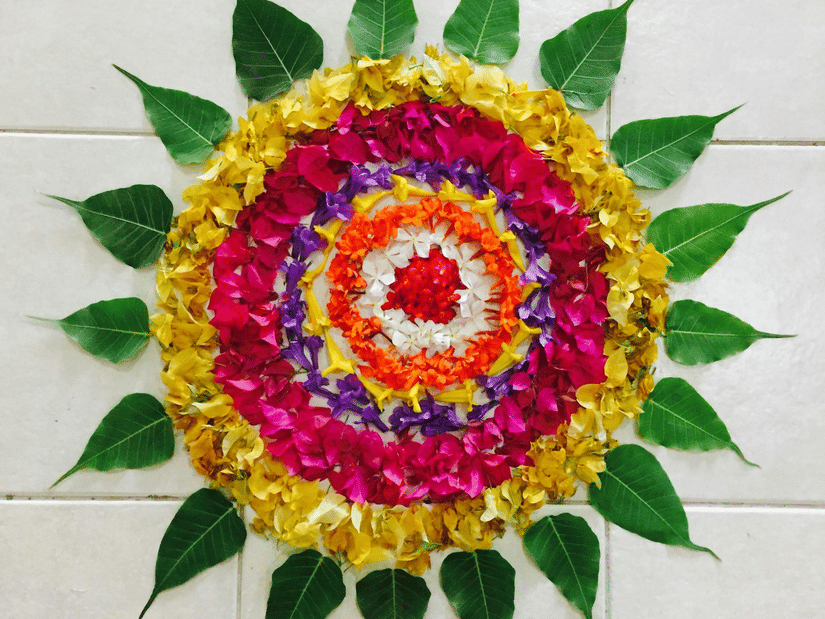
- Pookalam: Decorative rangoli made from fresh flowers and petals, laid out on doorsteps and courtyards from the first day of Atham as a welcome for King Mahabali, growing in size and complexity with each passing day until they fill entire courtyards
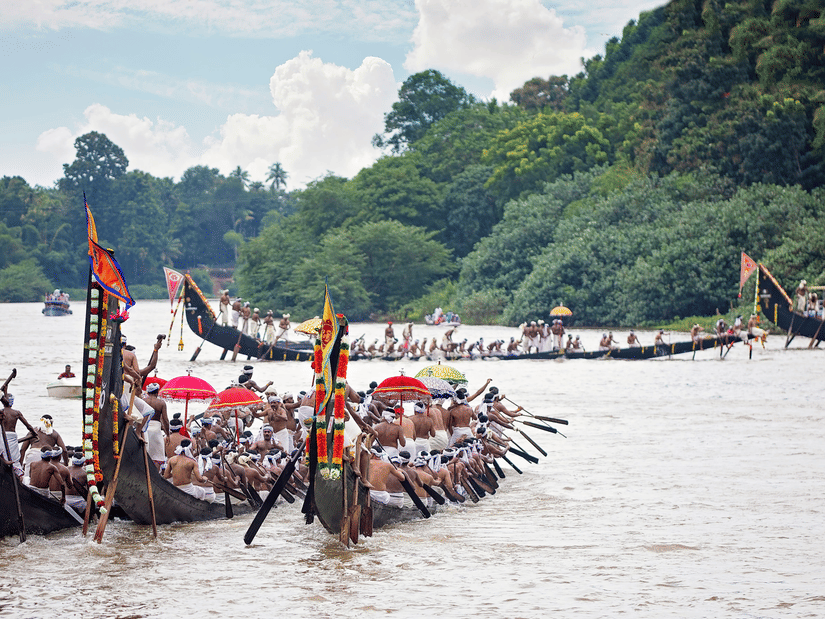
- Vallam Kali: Traditional snake boat races on Kerala’s backwaters, thunderous and precise, drawing spectators from across the country
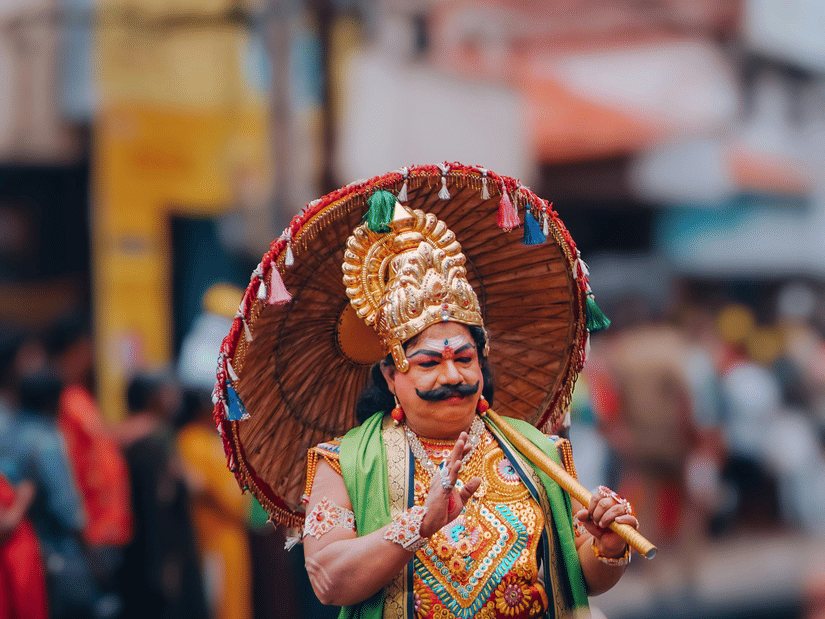
- Kathakali and Mohiniyattam: Classical dance performances bringing Kerala’s mythological stories to life across cultural venues, part of a performing tradition the city has carried for centuries.
- Onakalikal: Traditional folk games and community performances, vibrant reminders that Onam belongs to the street as much as the dining table.
Fort Kochi, with its layered colonial history and characterful lanes, gives these celebrations a backdrop that few other parts of the city can match.
Onam in the Lanes of Fort Kochi
Fort Kochi is perhaps where Onam feels most like itself. The old quarter moves at a different pace during the festival: pookalam designs spill across stone courtyards, the scent of fresh flowers mixes with the salt of the sea, and the streets carry the quiet hum of a celebration that has been happening here for a very long time.
Dutch-era walls, Portuguese-built churches, and the weathered lanes near the Chinese fishing nets all stand witness to an Onam that has endured through centuries of change. The area around Vasco da Gama Square and the fishing nets is particularly alive during the festival, with pookalam displays, cultural performances, and the particular energy of a neighbourhood that has been celebrating here longer than most cities have existed. Walking these lanes during the festival, past spice houses and old Jewish merchant homes, is to experience a layered history that few Indian cities still carry so openly. For those drawn to the performing arts of Kerala, Fort Kochi during Onam offers a rare and unhurried encounter with the real thing.
The Tower House: A Heritage Stay in the Heart of It All
The Tower House, our heritage hotel in Fort Kochi, stands on the site of a 17th-century lighthouse on Tower Road, facing the Chinese fishing nets that have marked the edge of the sea since the days of Kochi’s earliest traders. Built with scalloped walls and high wooden ceilings, The Tower House carries centuries in every corridor, and its antique furnishings carry the stories of the port city it has always been part of.
During Onam, Fort Kochi is filled with pookalam and the sound of celebration, and our doorstep sits at the centre of it. Our rooms and suites, furnished with heritage pieces and quiet with character, give the festival the setting it deserves. Our dining draws from South Indian tradition, with fresh, locally sourced ingredients that honour the season. The nearby attractions place Fort Kochi’s most significant heritage sites within comfortable walking distance, making this the kind of base from which Onam reveals itself fully.
Onam is, at its core, a celebration of abundance: of harvest, memory, and the belief that life, when lived well, should be shared equally. The Onam sadya is where that belief takes edible form, arriving dish by dish on a banana leaf until the afternoon slows into gratitude. Kochi is where the festival finds one of its richest expressions, and Fort Kochi, with its heritage streets and quietly layered past, is where Onam feels most worth travelling for. The Tower House, our heritage stay on Tower Road, places you within walking distance of the pookalam, the fishing nets, and the celebrations that fill these old lanes each August and September. Some festivals are best observed from a comfortable distance. Onam is not one of them.
FAQs
What is Onam sadya?
Onam sadya is a traditional vegetarian feast served on a fresh banana leaf during the Onam festival. A long sequence of individual preparations is served in a specific order that has been followed across generations in Kerala, with the balance of flavours—sweet, sour, salty, and bitter—carefully maintained throughout.
How many dishes are served in an Onam sadya?
A traditional Onam sadya includes a long sequence of dishes, typically well over 20 individual preparations. Key dishes include parippu, avial, sambar, thoran, pachadi, rasam, kaalan, olan, erissery, papadam, inji puli, and payasam, each served in a prescribed place on the banana leaf.
When is Onam celebrated?
Onam is celebrated in the Malayalam month of Chingam, which typically falls between August and September. The festival spans 10 days, with Thiruvonam being the most significant day when the grand sadya is served.
Why is Onam celebrated?
Onam is celebrated to honour the annual return of King Mahabali, a beloved ruler whose reign is remembered for prosperity and equality. According to legend, Mahabali was granted the right to visit his people once every year, and the festival marks that return with flowers, feasts, and festivities.
What is a pookalam?
A pookalam is a decorative rangoli made from fresh flowers and petals, laid out on doorsteps and courtyards during Onam. It is created as a welcome for King Mahabali and grows in size and complexity over the 10 days of the festival.
Where is a good place for the Onam celebration in Kochi?
Fort Kochi is among the most atmospheric areas for the Onam celebration in Kochi, offering cultural performances, elaborate pookalam displays, and a heritage setting that suits the spirit of the festival. The area around Vasco da Gama Square and the Chinese fishing nets is particularly vibrant during the celebrations.
What is the traditional attire for Onam?
The traditional attire for Onam is the Kerala kasavu: cream-coloured cotton with a gold border. Women typically wear the kasavu saree (mundum neriyathum), and men wear the kasavu dhoti (mundu). Both are worn as a mark of tradition and celebration across all 10 days of the festival.
Where to stay when visiting for Onam in Fort Kochi?
Yes, The Tower House, our heritage property in Fort Kochi, is located on Tower Road near the Chinese fishing nets. It is well placed for the Onam celebration in Kochi, with the cultural landmarks of Fort Kochi within walking distance and a heritage atmosphere that matches the spirit of the festival.