The Stories Behind the Folk Dance of Rajasthan
Every folk dance of Rajasthan began as something functional. Some were seasonal, tied to harvests, monsoons, and festivals that marked the agricultural calendar. Others were devotional, performed at temples and shrines as offerings to deities.
A few were ceremonial, woven into weddings, births, and rites of passage that held communities together across centuries of migration and hardship. What makes them remarkable today is their continuity: unlike many folk traditions that survive only in archives, Rajasthan's dances remain embedded in daily life.
Communities in Barmer, Jodhpur, Jaipur, and Alwar still perform them in their original social contexts, not only on stages constructed for audiences.
Kalbelia Dance, Rajasthan: The Serpent's Sway
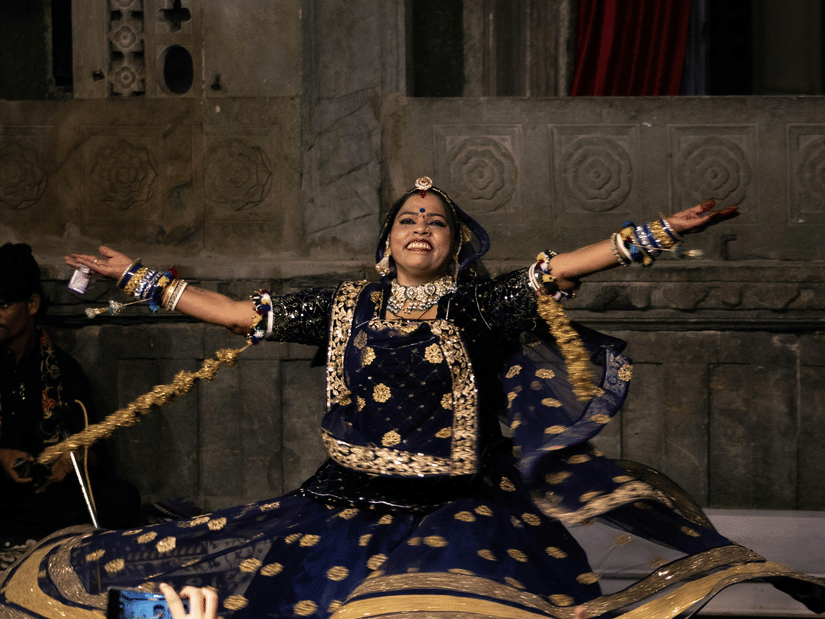
The Kalbelia dance of Rajasthan is performed by the Kalbelia community, a nomadic group traditionally associated with snake charming, and the dance carries every association that history implies. The movements are sinuous and low to the ground, with women dressed in flowing black embroidered skirts adorned with mirrors and silver thread that fan outward as they spin.
Recognised by UNESCO in 2010 as part of the Intangible Cultural Heritage of Humanity, Kalbelia is accompanied by the been (a wind instrument resembling a pungi), khanjari, and the dholak. The footwork is intricate, the transitions between postures fluid, and the speed of the spins is something that photographs rarely capture faithfully.
Ghoomar Dance, Rajasthan: Grace in Every Circle
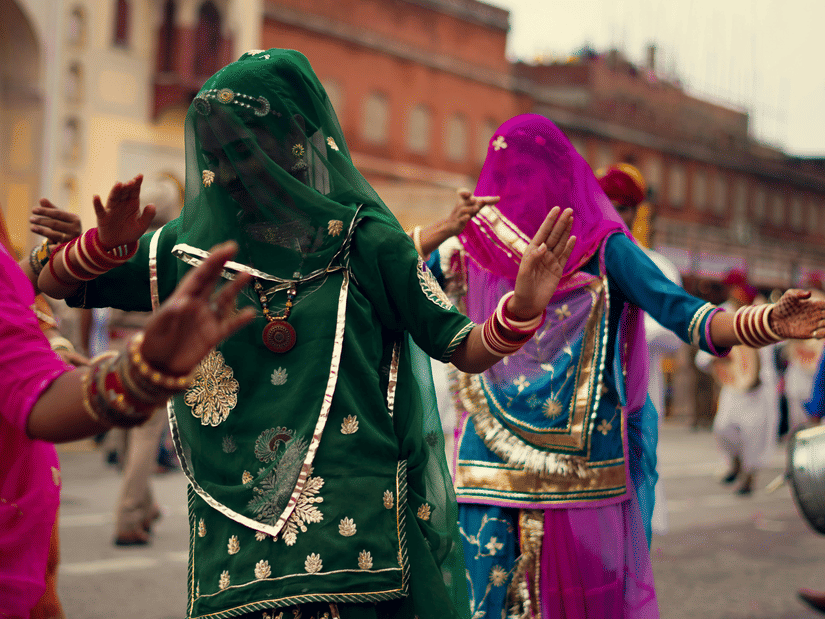
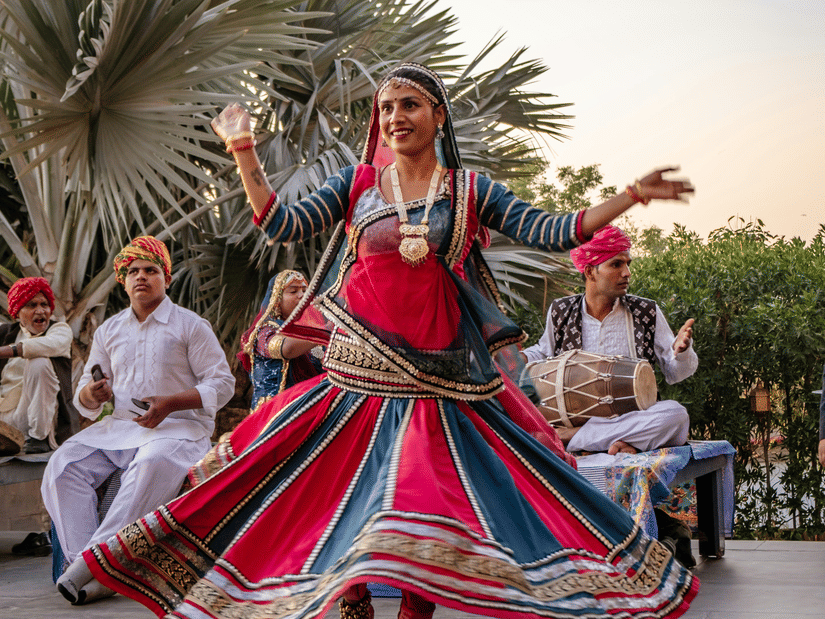
If Kalbelia moves like a serpent, the Ghoomar dance in Rajasthan moves like water, finding its level in long, graceful arcs that carry the performer through the space rather than against it. Traditionally performed by Rajput women at auspicious occasions, Ghoomar takes its name from the Rajasthani word for spinning.
The performers wear full-skirted ghagras, often in deep reds and oranges, that open into wide circles as the spin accelerates. The arms move in measured gestures between each revolution, drawing patterns in the air that hold their shape for just a moment before the next turn begins.
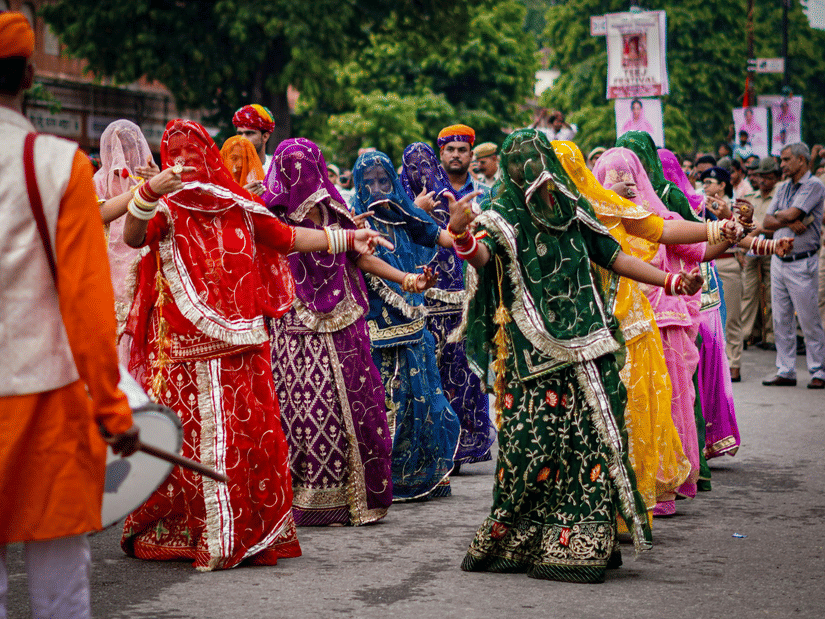
Ghoomar is performed at festivals like Teej and Gangaur across the state, making it one of the most recognisable dance forms that Rajasthan has carried into the present day.
Dance Forms Worth Knowing
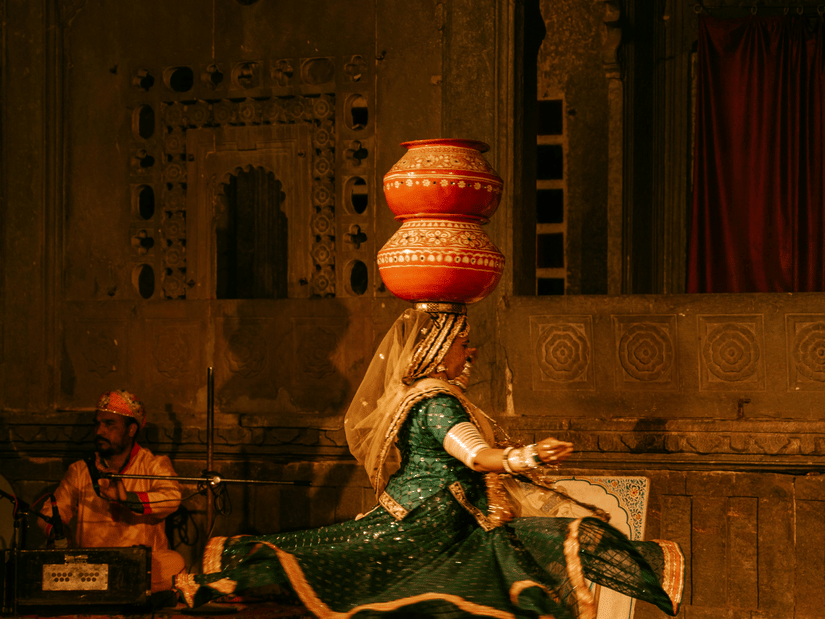
- Bhavai: Performed primarily in the Marwar region, Bhavai involves balancing a stack of earthenware pots on the head while dancing on the rim of a brass plate. The display of balance is extraordinary, and the dance originally expressed the hardship of drawing water in a desert landscape.
- Terah Taali: A seated dance performed by women of the Kamad community, Terah Taali involves attaching brass manjiras (small cymbals) to various parts of the body and striking them in sequence in 13 different ways while maintaining fluid upper-body movement. The name translates to "13 beats".
- Chari Dance: Originating from the Kishangarh area, this dance is performed by women balancing lit brass pots on their heads, representing the daily task of carrying water. The flame remains steady throughout, a mark of the dancer's composure and training.
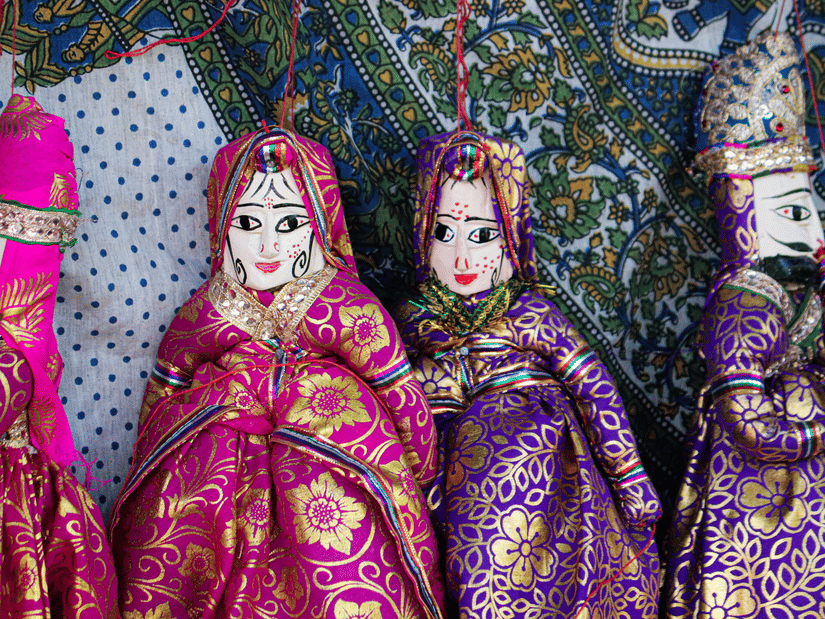
- Kathputli: Though primarily a puppetry tradition, Kathputli performances are always accompanied by folk musicians and dancers, making it an inseparable part of Rajasthan's performing arts landscape.
Folk Dance in Alwar: Where Heritage Finds a Stage
Alwar occupies a particular position in Rajasthan's cultural landscape. As the district that first receives travellers arriving from Delhi, it carries the influence of the Aravalli range, the legacy of the Alwar princely state, and a tradition of arts patronage that shaped the region's character across centuries.
Folk dance in Alwar has always reflected this layered heritage, with performances tied to festivals like Teej, Gangaur, and Navratri drawing communities together across the district. The town of Tijara, situated within the Alwar district, has historically been a crossroads for travellers moving between Delhi and Rajasthan.
What It Feels Like to Watch a Live Performance
Watching a live Rajasthani folk dance performance is not the same as watching a recording, even a well-produced one. The sound of the dhol builds in your chest before it reaches your ears. The embroidery on the costume catches the torchlight differently with each revolution.
The dust that lifts from a courtyard floor as the dancers move, and the warmth of the evening air, are details that a screen cannot deliver. The best settings for live performances are heritage courtyards and open-air stages where the architecture frames the movement rather than distracts from it.
An arched stone wall lit at dusk adds a dimension to a Ghoomar performance that a conventional stage simply cannot replicate. The dance and the setting become one.
A Heritage Stay at Tijara Fort-Palace
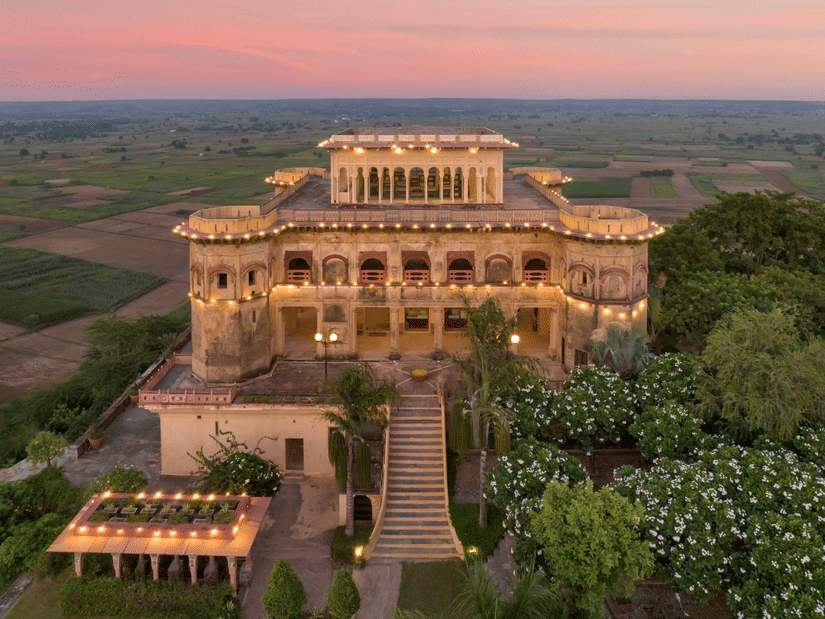
For those travelling through the Alwar district, Tijara Fort-Palace offers one of the more considered settings for experiencing Rajasthan's living heritage. Our 19th-century fort hosts evening cultural performances on Saturdays: a chance to watch Rajasthani folk dance in a courtyard framed by sandstone arches and 7 terraced gardens that climb the Aravalli hillside.
Our 109 rooms and suites, each decorated by and named after a leading Indian artist or designer, are distributed across 5 distinct wings: Rani Mahal, Mardana Mahal, Deewar Mahal, Tope Mahal, and Khajur Mahal, each with its own architectural character and views.
The nearby attractions around Tijara extend the cultural experience well beyond the fort's walls, with the Aravalli landscape and the heritage sites of the Alwar district within easy reach.