The Chola Port Behind the Legend of Kannagi
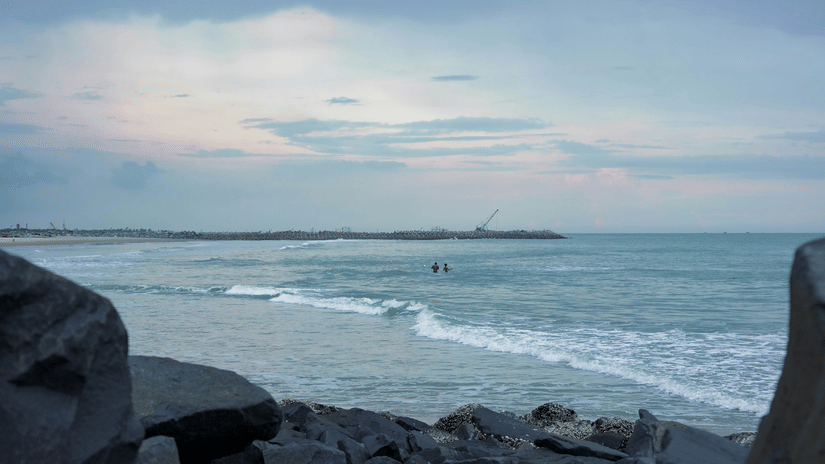
Poompuhar was once called Kaveripoompattinam, the place where the river meets the sea, and for a while it served as the capital of the Chola king Karikala Cholan. Foreign ships were loaded and unloaded along its wharves, trading directly with Rome and other overseas ports 2,000 years before container ships existed. Excavations have since turned up submerged wharves and pier walls along this stretch of coast, evidence of the busy harbour that once stood where the waves now break.
The same port carries a second identity in Silappathikaram, the Tamil epic that opens with Kannagi and Kovalan settling here before their story turns toward Madurai. Poompuhar is where their life together begins, which is why the town later rebuilt its own legend in stone, an entire tourist complex raised specifically to bring Silappathikaram's key scenes back into view.
Walking Through Poompuhar's Sculpted Monuments
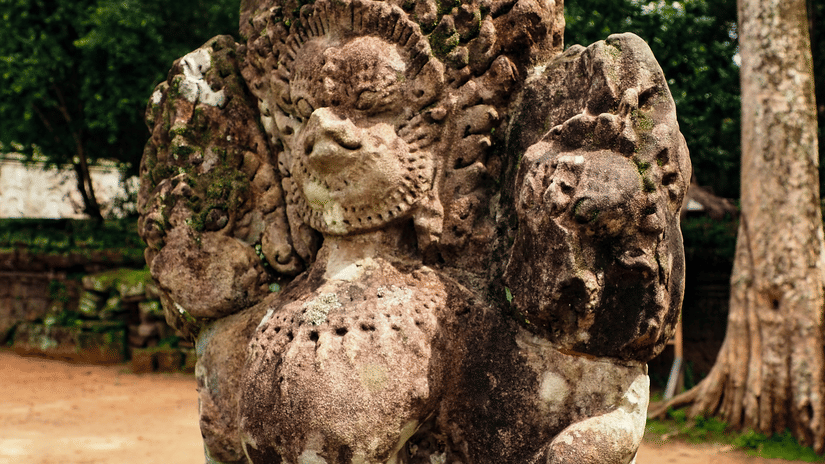
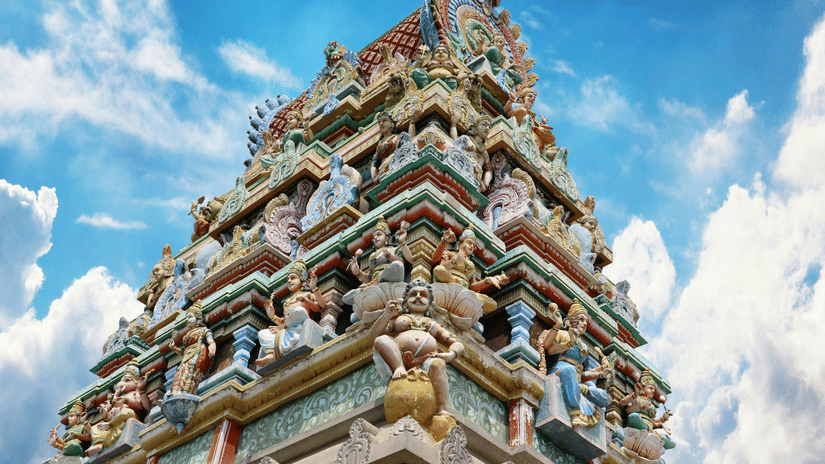
Among the Poompuhar tourist places built to recreate this history, a 7-storey art gallery comes first, its facade carrying sculpted scenes lifted directly from Silappathikaram. The epic unfolds chapter by chapter in bas-relief across the building, so the story moves with you from one panel to the next rather than sitting still in a single frame.
Beyond the gallery, smaller structures continue the same idea. Nedungal Mandram and Elanchi Mandram carry their own sculptural work; Pavai Mandram adds another chapter, and Kotrapandal stands as a monumental theatre, each raised specifically to narrate a piece of Silappathikaram.
The Marine Archaeological Museum that Surfaced from the Sea
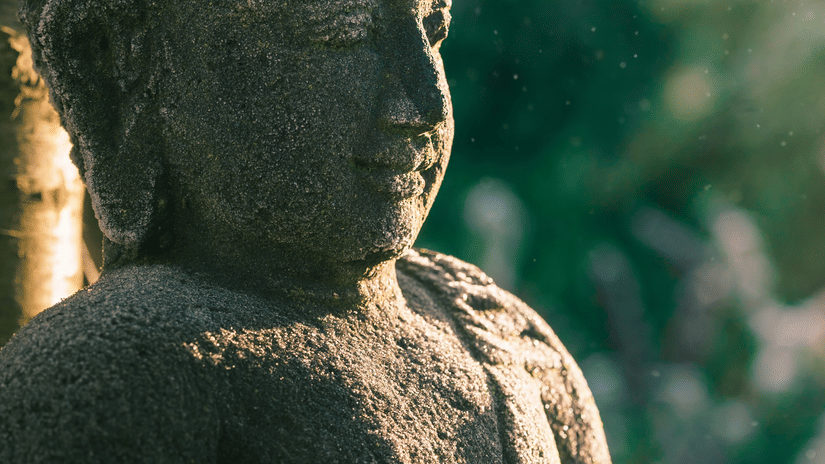
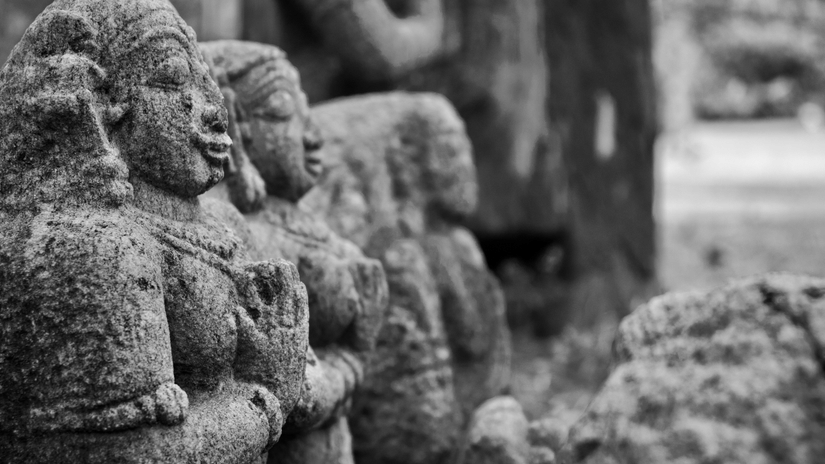
The Marine Archaeological Museum at Poompuhar opened in 1997, the only museum of its kind in India built specifically for underwater archaeology, run by the Tamil Nadu State Department of Archaeology. Preliminary explorations here began in 1981, followed by a series of National Institute of Oceanography dives off Tranquebar and Poompuhar between 1989 and 1991. Inside sit Roman pottery, terracotta Buddha figurines, ship models, and stone sculptures pulled from the same water that once carried the port's trading vessels.
Poompuhar Beach: A Shoreline Written into an Epic
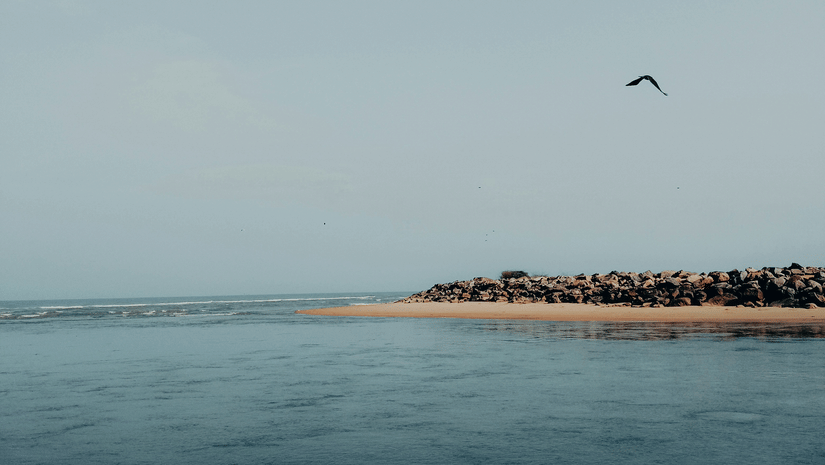
Poompuhar Beach runs along the same coastline the epic describes, close enough to the art gallery that both sit within one walk. The Poompuhar tourist complex along this shore draws thousands of visitors each day. Its 33 acres are built specifically to hold the Silappathikaram monuments, the museum, and the beach together as a single visit rather than 3 separate stops. Wide and open, the sand here works as the natural close to a Poompuhar day out, a place to sit for a while before the drive back to Tranquebar.
The Poompuhar Temple most worth a stop is Pallavaneswarar, a Chola-era shrine dedicated to Shiva with a large lingam at its centre and Soundaranayaki worshipped alongside him as consort. It carries the formal status of a Paadal Petra Sthalam, sung by the poet-saint Sambandar, and its older name, Tiruppallavaneechuram, comes from the same root as Poompuhar itself, Kaveripoompattinam, the place where the Kaveri River reaches the sea.
Its Navagraha shrine breaks from the usual pattern, with all 9 planetary deities facing west toward Shiva instead of their customary directions. The temple also holds the legend of Pattinathaar, a wandering saint said to have renounced everything after finding spiritual wisdom written on a cowdung cake, and it marks the birthplace of Iyarpagai Nayanar. Sangam-era literature adds one more layer: Madhavi and Manimekalai, figures from the epic that follows Silappathikaram, are both linked to this same stretch of coast.
How to Reach Poompuhar from Tranquebar
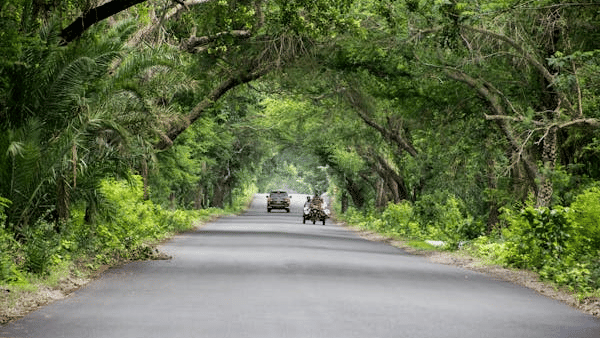
Distance: Poompuhar sits about 24 km north of Tranquebar along the coast.
Drive Time: The trip takes around 30 minutes by road each way.
Best Timing: Leave in the morning to reach the complex before the midday heat sets in over its open grounds.
Round Trip: Poompuhar's monuments, museum, and beach fit comfortably into a half-day out, with time to return for lunch.
Best Time to Visit and Travel Tips
Best Season: November to February tends to be the most comfortable stretch on this coast, once the year's heaviest rain has passed.
What to Carry: Sun protection and comfortable footwear matter most, since much of the complex sits in the open.
Morning Visits: Arriving early keeps the walk between the gallery, the temple, and the beach comfortable before the day heats up.
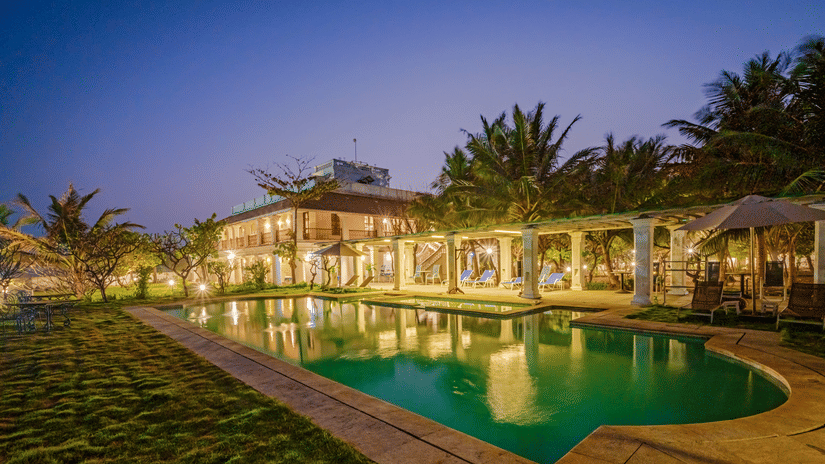
A foot massage awaits on arrival, offering a soothing pause after the day's journey before you settle into the bungalow. Our 8 vintage rooms are each named after a Danish ship that actually sailed these waters. Some look towards the sea, catching the first light over the Bay of Bengal between the temple and the fort, while others open towards the garden and pool. Wake to the sunrise over the water or step out to a garden view, with the pool below and the sea close by.
As evening sets in, dinner moves to the balcony, where coastal Tamil flavours meet the sound of the waves and the Bay of Bengal beyond the railing. Let the meal unfold with the sea as its backdrop, while the bungalow's setting, pool, and garden give the rest of the stay an easy rhythm between the coast and the heritage around it.